HIPAA Compliance Software for Telehealth Providers
Telehealth practices face the same HIPAA expectations as in-person ones, plus the added complexity of remote endpoints, video vendors, and recording retention. HIPAA Security Suite gives telehealth providers a single workspace to manage all of it.
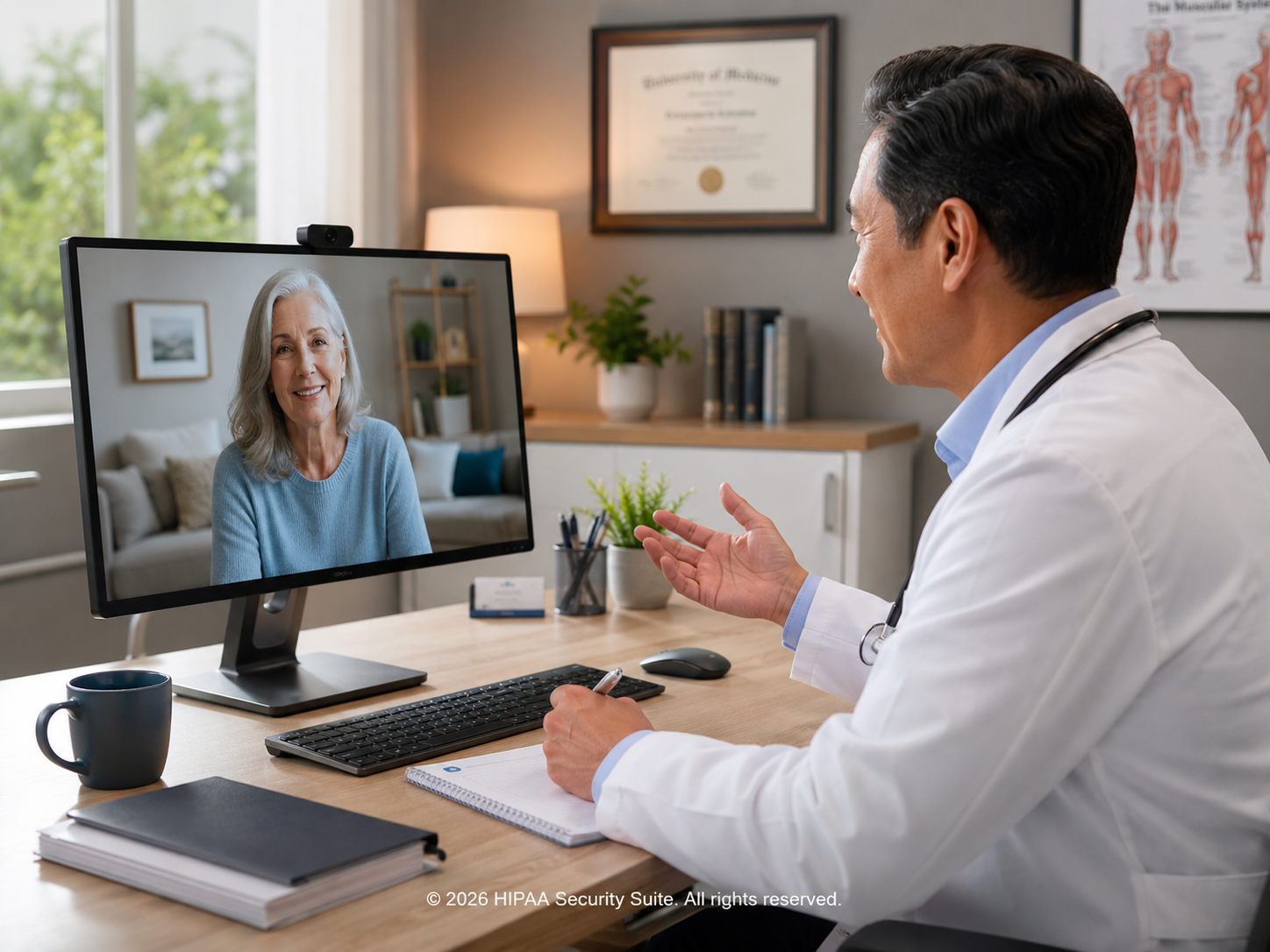
Where telehealth complicates HIPAA
More vendors, more BAAs
Video, messaging, scheduling, eRx, payments, and recording vendors all need current BAAs.
Remote endpoints
Clinician laptops and home networks are part of your HIPAA Security Rule scope.
Recording & retention
If you record visits, retention, access controls, and breach risk all increase.
What HIPAA Security Suite covers
| Telehealth need | How the platform helps |
|---|---|
| Vendor / BAA tracking for telehealth stack | Centralized BAA list with renewal reminders. |
| Workforce training on remote PHI handling | Per-user video training, reminders, certificates, and reporting. |
| Customized policies (telehealth, remote work, sanctions) | Pre-built customizable policies tailored to your practice. |
| Endpoint security for clinician devices | NSS Agent scanning, encryption visibility, and patch status. |
| Breached-credential monitoring | Continuous alerts on exposed company credentials. |
| CVE / threat tracking | CISA KEV feed surfaces actively exploited vulnerabilities to patch. |
| Audit-ready documentation | One workspace produces the full evidence package. |
Built for distributed clinical teams
Whether you run a fully remote behavioral health practice, a hybrid medical clinic, or a multi-state telehealth platform, the workspace is designed for distributed workflows: per-user attestations, role-based training, and endpoint visibility regardless of where clinicians are.
Quote-based pricing scales to user count and scope.
Frequently asked questions
What HIPAA requirements apply to telehealth providers?
Telehealth providers are still HIPAA covered entities or business associates and must follow the Privacy, Security, and Breach Notification Rules. Telehealth video, messaging, scheduling, and recording vendors typically require signed BAAs.
What changed after the COVID-19 telehealth flexibilities ended?
Enforcement discretion for non-HIPAA-compliant communications platforms ended, and providers are now expected to use HIPAA-compliant telehealth tools with current BAAs and documented risk-management practices.
How does HIPAA Security Suite handle clinician laptops & remote endpoints?
NSS Agent scans clinician endpoints for vulnerabilities and patch status. Breached-credential monitoring flags exposed credentials. CISA KEV tracking calls out actively exploited CVEs that require urgent action.
Can we run a fully remote practice on it?
Yes. The platform is designed to support distributed workforces with per-user training, policy attestations, endpoint scanning, and centralized documentation.
See HIPAA Security Suite for telehealth
Get a guided walkthrough focused on telehealth realities — vendor BAAs, remote endpoints, recording retention, and audit-ready reporting.